You’re Not Multitasking — You’re Just Doing Two Things Badly
What if you cut your distractions in half? Run the numbers and it comes out to about $240,000 a year — hiding in plain sight.
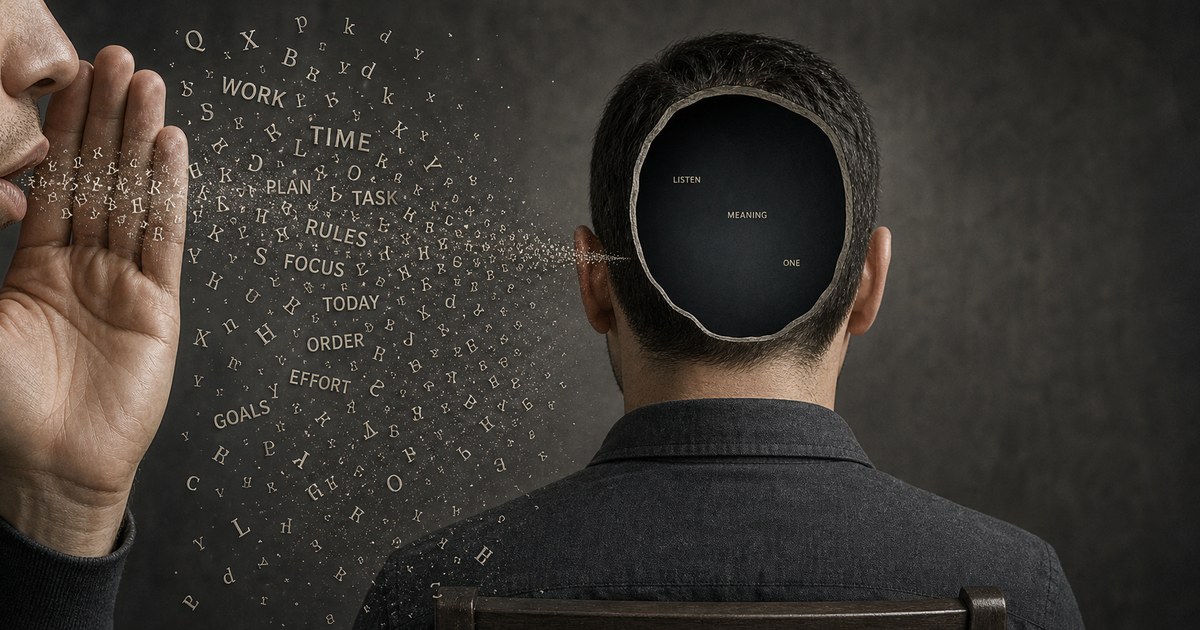
For years I called myself a good multitasker. Email open, Slack open, a spreadsheet half-built, a call on speaker, a text buzzing in. I thought the buzz was proof I was in demand. I figured a fella juggling five things at once must be getting five things done.
I was doing all five badly. I just couldn't see it, because I never sat still long enough to notice. Yes, I know — the pot calling the kettle black. We'll get there.
The friction I want to name today is distraction friction: the tax you pay every time your attention gets yanked off the one thing that matters and dropped onto something that only feels urgent. And in a minute I'm going to show you, with slow and simple arithmetic, that the tax runs about a quarter-million dollars a year for a small team. Stick with me.
Nobody argues with this — that's the problem
Here's the strange part. Nobody disagrees with me on this one.
Tell a room full of operators that constant notifications are wrecking their focus, and every head nods. Tell them social media is built to pull them, that the ping every five minutes has a cost, that half their meetings didn't need to happen — nodding. We all know.
So if everybody already agrees, why does nothing change? Hold that thought, honey badger. It's the whole game, and I'll come back to it.
The pilot doesn't check his phone on final approach
I fly. In the cockpit there's a rule for the busiest, most dangerous moments: aviate, navigate, communicate — in that order. Fly the plane first. Point it where it's going second. Talk to anybody third. When it matters most, you guard the one thing that keeps you alive, and everything else can wait its turn.
You would never board a plane where the pilot was thumbing out a text on final approach. You'd get off, and you'd tell your friends about it. And yet you run your whole workday answering the text on final approach — every task chopped up by the next ping, the next tap on the shoulder, the next "hey, got a sec?"
You already believe attention is life-or-death when a stranger's holding your life. You just never extended your own work the same courtesy.
The part you don't feel: the residue
Here's the sneaky cost, the one that never shows up on any calendar. When you snap off a task to check a message, your head doesn't cleanly follow. A piece of you stays back on the thing you left — and a piece of you is still chewing on that message when you come back.
I'm not the first to notice this. A researcher named Sophie Leroy gave it a name — attention residue — the gunk your brain leaves behind on the old task when you jump to a new one. Other researchers (Gloria Mark's team at UC Irvine) have clocked how long it takes to climb all the way back into deep work after an interruption, and the honest answer is way longer than the interruption itself — on the order of twenty-plus minutes. Now, I'll be straight with you: I believed this long before I read a study, because I've lived it. The research just puts a number on what your own workday already screams at you.
Because that's the real math of an interruption: it isn't the ninety seconds you spent on the ping. It's the ninety seconds plus the long, foggy climb back to where you were — done twenty, thirty, fifty times a day. Every switch, you pay the toll twice. It's why you can be busier than a one-armed paper hanger from 8 to 6 and still feel like you never landed a single thing.
I know that toll because I paid it for years and called it leadership. I'd sit down to build the one thing that would actually move the company — the model, the plan, the offer — and I'd "just check" the inbox first. Two hours later I'd answered forty messages, felt like a champ, and hadn't touched the one thing. It slid to tomorrow. Then the next tomorrow. The most important work in my business was always the work I was too "busy" to do — and busy was just the costume distraction wore so I wouldn't notice it running the whole show.
Now the $240,000. Let's actually do the math.
Every time I bring this up, somebody says the same thing: "Sure, distraction's bad, but you can't put a number on it. How much does it really cost? Nobody knows."
You can't price it head-on, that's true. So we run it backwards, slow and simple. Follow along — no calculator needed.
Start with one person and one number we all agree on: cut distraction in half. Not to zero. Half. Half the pings, half the pointless meetings, half the "quick questions." Nobody in the room argues that 50% is impossible.
Step 1 — does half the distraction double your output? No. It's not one-for-one, and I won't insult you by pretending it is. So let's lowball it hard. Say cutting distraction in half buys you 25% more real work getting done. Just a quarter.
Step 2 — put that 25% on a normal 8-hour day. A quarter of eight hours is two hours. So the honest, conservative payoff is about two solid hours of real output per person, per day — output you simply weren't getting before.
Step 3 — stretch it across a year. Two hours a day, times about 240 working days, is 480 hours a year, per person. That's twelve full 40-hour weeks — three months of capacity you didn't know you had.
Step 4 — now walk into a room with ten people. If everyone gets 25% more done, ten people now produce like twelve and a half. You just added two and a half people of output — and you didn't hire anybody.
Step 5 — put a dollar on it. Say a loaded hour of your people's time is worth $50 (swap in your real rate). 480 hours × $50 is $24,000 per person, per year. Times ten people is $240,000 a year.
There it is, butterfly. The number you swore couldn't be calculated. Two hundred and forty grand, for a ten-person shop, at a modest rate — the standing cost of the distraction, worked out backwards from a 50% cut nobody thinks is unreasonable. Your rate's higher? The number's bigger. Your team's bigger? Bigger still.
Now let me get ahead of the skeptic — because I'd be one too. "Twenty-five percent is optimistic, Grayson." Fine. Say I'm wrong. Cut my number clean in half. Call it 12.5%, not 25%. You're still handing every person back an hour a day, still banking six weeks a year each, still pulling $120,000 out of thin air for a ten-person shop. Halve my "rosy" number and what's left is six figures. This was never a promise of 25% — it's a floor, and even the floor is real. That's real productivity. That's real output. That's real money you're leaving on the table right now, today, while you read this — not because you couldn't grab it, but because grabbing it means changing how you work.
So why don't we do it?
Here's where I've got to be honest, including with myself — because this is the part I was missing.
We all agree distraction's killing us. We all agree the notifications are bad. And near about none of us change a single thing.
It's not a knowledge gap. It's an identity gap.
Cutting distraction in half means doing the hard thing instead of the feel-good thing. It means changing the pattern that got you here — the same pattern that brought you your comfortable, good-enough, mediocre success. And that pattern is warm. It pays you. Every time the phone lights up, that's a little hit of dopamine. Every time you swap the hard task for an easy message, that's a little relief. Every time you answer something you didn't have to, that's a little "I'm needed." It feels like work while asking nothing real of you, and that good feeling is exactly why it's so blasted hard to put down.
You're not choosing distraction because you're weak, honey badger. You're choosing it because the pattern pays you — in comfort — right now — and the bill comes due later, quiet, in the year that didn't move and the projects that never shipped.
You can't cannonball into a new self
So here's the part nobody wants to hear, and I'm going to say it plain.
You are not going to fix this today. You're not going to fix it this week. Not in two weeks, not in three, not in four. An identity doesn't turn on a dime, and anybody selling you a weekend transformation is selling you a feeling, not a change. You can't cannonball into a new self and climb out a different person. The water doesn't work that way.
What actually breaks a pattern is smaller and a whole lot less exciting than that. You take the mountain and you break off one rock you can actually lift. One task. Small enough that "I'm too busy" is obviously a lie. Then you do that one small thing at the exact same time every single day — not "sometime today," not "when I get to it," the same time, like the sun coming up — and you repeat it. And repeat it. And repeat it, past the point it's interesting, past the point you feel like a hero for it, until the day it stops being a thing you do and becomes a thing you are.
That's the whole mechanism. Small enough to start. Same time every day. Repeated long enough that the new groove is deeper than the old one. That's not glamorous. It won't trend. It's just the only thing that's ever actually worked.
The distraction was never the enemy. The comfort of the old pattern is the enemy — and you beat it one small, boring, repeated rep at a time.
Four questions before the next "quick thing"
When the next interruption reaches for you, run these — the way I run a pre-landing checklist:
- Is this an emergency, or a habit? Be honest. Almost always: habit.
- What am I actually flying right now — and can it wait? Name the one task out loud. Protect it.
- Am I choosing this, or is the notification choosing for me? If the phone picked, you didn't.
- Will I be glad I switched, one hour from now? If not, don't.
Four questions. Ten seconds. They wedge a gap between the itch and the reflex, and the whole fight's won or lost in that gap.
Not "one more" — the right one
You'll hear the productivity crowd holler "one more" — one more call, one more email, one more push. Sometimes that's exactly the move. But most of the time the next thing isn't the one-more that matters — it's just the nearest shiny thing wearing an urgent costume, yankin' your sleeve like a toddler in a checkout line.
The skill was never doing more things. It's doing the right thing, all the way through, before you touch the next one.
Monday
Pick one hour Monday morning. Same hour you'll pick Tuesday, and Wednesday, and the sorry Monday after that. Phone in another room — not face-down on the desk, another room — because the thing on the desk still owns a piece of you. One task, start to finish. When the itch to check something hits, let it pass without obeying it.
Do it once and you've had a nice morning. Do it at the same time every day for a few months and you've become somebody else — the somebody who quietly banks that number instead of paying it.
Because that's what's actually on the table here, honey badger. Not a productivity hack. That's time you didn't have before. That's money you didn't have before. That's a life you didn't have before — the projects that finally ship, the evenings that aren't leaking work, the year that actually looks different than the last one.
It's all sitting right there, on the other side of one small thing done at the same time every day. So pick your hour. Then decide who you want to be for the other seven.
Cut the friction. Win your day back.
Our 30-Day Cost-Savings Sprint finds the first system worth fixing — and the first call is free.
Book a free call