Stop Waiting to Be Told
Most people wait to be told the next step and call it being careful. It’s fear wearing a responsible-looking coat.
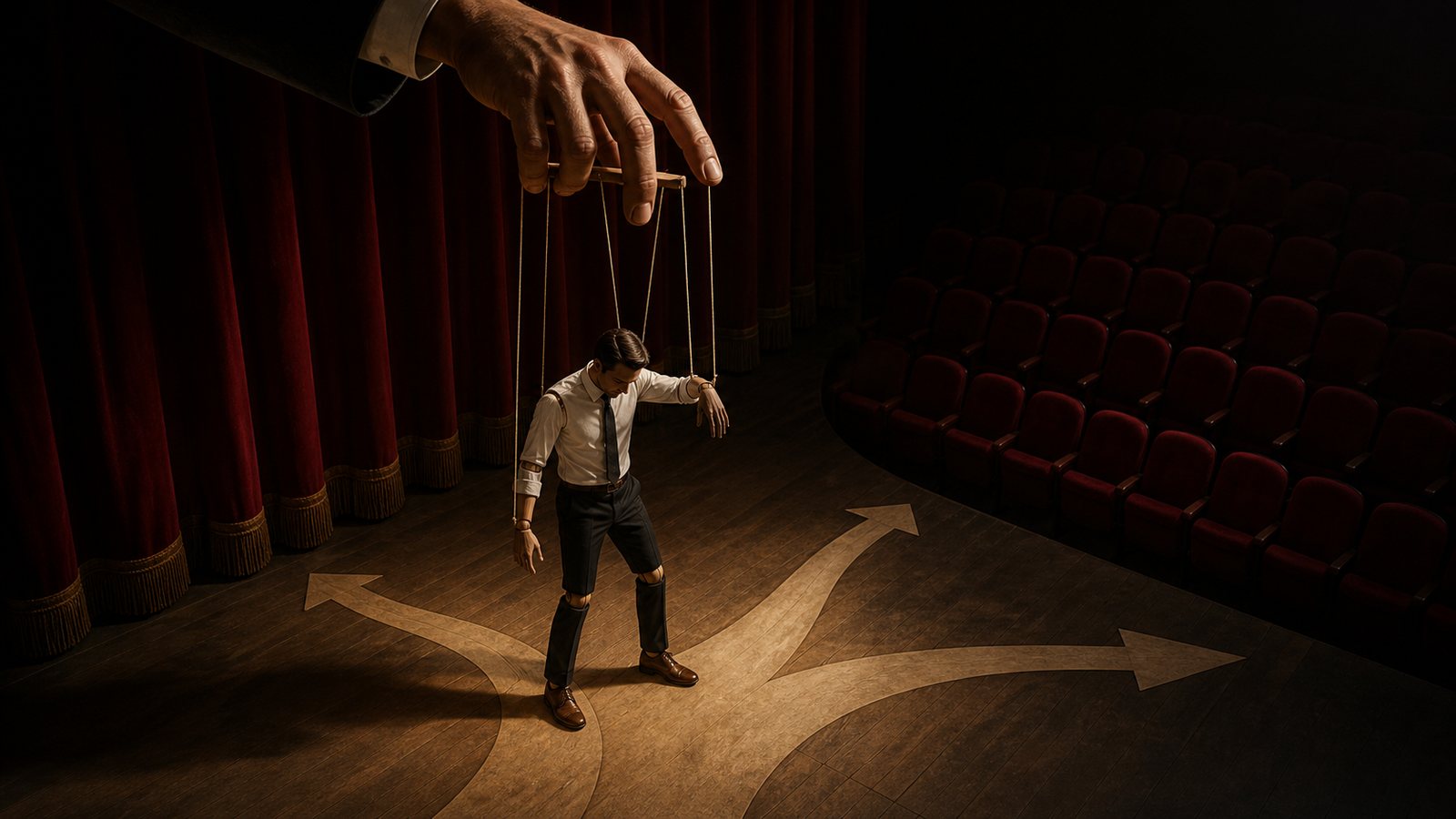
Here’s the friction, named before I waste your time: most people wait to be told the next step, and they call it being careful. It isn’t careful. It’s fear wearing a responsible-looking coat — and it turns capable adults into task monkeys who can only move when someone points.
Let me put myself in the chair first, because I’ve done the pointing and the waiting. Early in my career I was the one standing at the fork in the road, holding a piece of work, waiting for someone above me to tell me which way — not because I couldn’t see the answer, but because if I picked and I was wrong, that would be on me. Waiting felt safe. Waiting can’t be blamed. And that instinct, which felt like diligence, was actually the most expensive habit I had.
The tell
You know the tell when you see it. You give someone a piece of a project and they come back to you at every single fork: which one do you want? should I do A or B? do you want me to send it now or wait? Reasonable questions, one at a time. But string them together and you realize you’re not working with a professional — you’re operating a puppet, and your hand is getting tired.
Here’s the honest thing underneath it, the part nobody says out loud: they’re not asking because they don’t know. Half the time they know exactly what the right move is. They’re asking because if they decide and it goes wrong, the decision is theirs — and if they ask you and it goes wrong, the decision was yours. Every unnecessary question is a small transfer of risk from them to you. It looks like diligence. It’s insurance.
Where the waiting comes from
Fear drives this, all the way down. Fear of being wrong. Fear of being blamed. Fear of being the one who made the call that didn’t work out. We have raised a lot of people to believe that the worst thing you can do is be wrong — that a mistake is a mark against you rather than the cost of moving — and so they optimize their whole working life around never being caught holding a bad decision. Everybody wants the participation trophy: credit for showing up, none of the exposure for actually choosing.
And I understand it, because the fear isn’t irrational in a lot of workplaces. If every wrong call gets someone’s head taken off, then of course people stop making calls. They learn that the safe move is to push the decision up the chain and wait. You can’t blame someone for not taking risks in a building where taking a risk and being wrong ends careers. The waiting is often a rational response to how the place actually treats mistakes.
People don’t wait because they’re lazy. They wait because deciding is the only thing that can be held against them.
What it looks like when someone stops waiting
Let me make it concrete. Say we’re working a problem and the person finds an answer: shipping the product from a different location costs the same, and doing it from there saves six percent in sales tax. There are two versions of what happens next.
The task monkey reports it and stops: “Hey, I confirmed we’d save six percent if we shipped from the other location — let me know how you want to proceed.” Now the decision is back on my desk, the work is paused, and they’re safe. They found the truth and then handed me the risk of acting on it.
The professional takes the truth and moves: “I confirmed the six percent savings, so I’m switching the account address to the other location — flagging it here so you know.” Same information. Same person, even. The only difference is that one of them treated the discovery as a reason to wait for permission, and the other treated it as a reason to act as if it were their own money and their own time. That second instinct — act as if it’s mine — is the entire difference between someone you have to run and someone who runs the thing for you.
This is your problem to fix, too
I want to be fair, because the owner reading this is usually half the cause. If your people wait for you at every step, some of that is fear they brought, and some of it is fear you taught. If being wrong in your building is dangerous, they’d be foolish not to wait. So the fix isn’t just a lecture about initiative. It’s two things, and you own one of them.
You own giving them the authority, explicitly, out loud: within these boundaries, you decide, and you make the call as if it were your own money — don’t come back to me for things inside that fence. And you own making it safe to be wrong while trying, so that a good-faith bad call becomes a lesson instead of a hanging. You can’t demand initiative in an environment that punishes it. You have to build the fence that makes deciding safe, and then hold people to actually deciding inside it.
The move for Monday
For the person who keeps waiting: the next time you catch yourself about to ask a question you already know the answer to, don’t ask it. Make the call, take the action, and then tell the person what you did and why — “I found X, so I did Y, flagging it.” You’ll be right most of the time, you’ll build the muscle every time, and on the rare occasion you’re wrong, you’ll have learned something a question never would have taught you.
And for the owner: pick one person and draw the fence out loud this week. Tell them exactly where their authority is, tell them to act inside it as if the money were theirs, and tell them that a wrong call made in good faith inside the fence is safe with you. Then hold your tongue the next time they decide something you’d have decided slightly differently. That silence is where a task monkey turns into a professional.
I’m not above this. I spent years waiting at forks I could see clearly, because being wrong felt worse than being slow. It doesn’t. Slow is the expensive one. Take what fits. Leave the rest.
Cut the friction. Win your day back.
Our 30-Day Cost-Savings Sprint finds the first system worth fixing — and the first call is free.
Book a free call